The Safe Operating Space is an Earth system state that allows humanity to develop and thrive for generations to come. It includes conditions similar, though not necessarily identical, to those of the Holocene epoch (beginning around 11,700 years ago). The Holocene epoch, during which agriculture and modern civilizations developed, was characterized by relatively stable and warm planetary conditions compared to the colder and more variable environmental, ice age conditions in the preceding Pleistocene.
Humanity's Journey on Earth
Human population size and global temperature from 500,000 years before present until 2100 (projected). For over 10,000 years, humanity lived in a very stable climatic period (the green corridor) that made human development possible. But by overshooting Planetary Boundaries, this period has ended, and humanity now faces a more dangerous path forward.
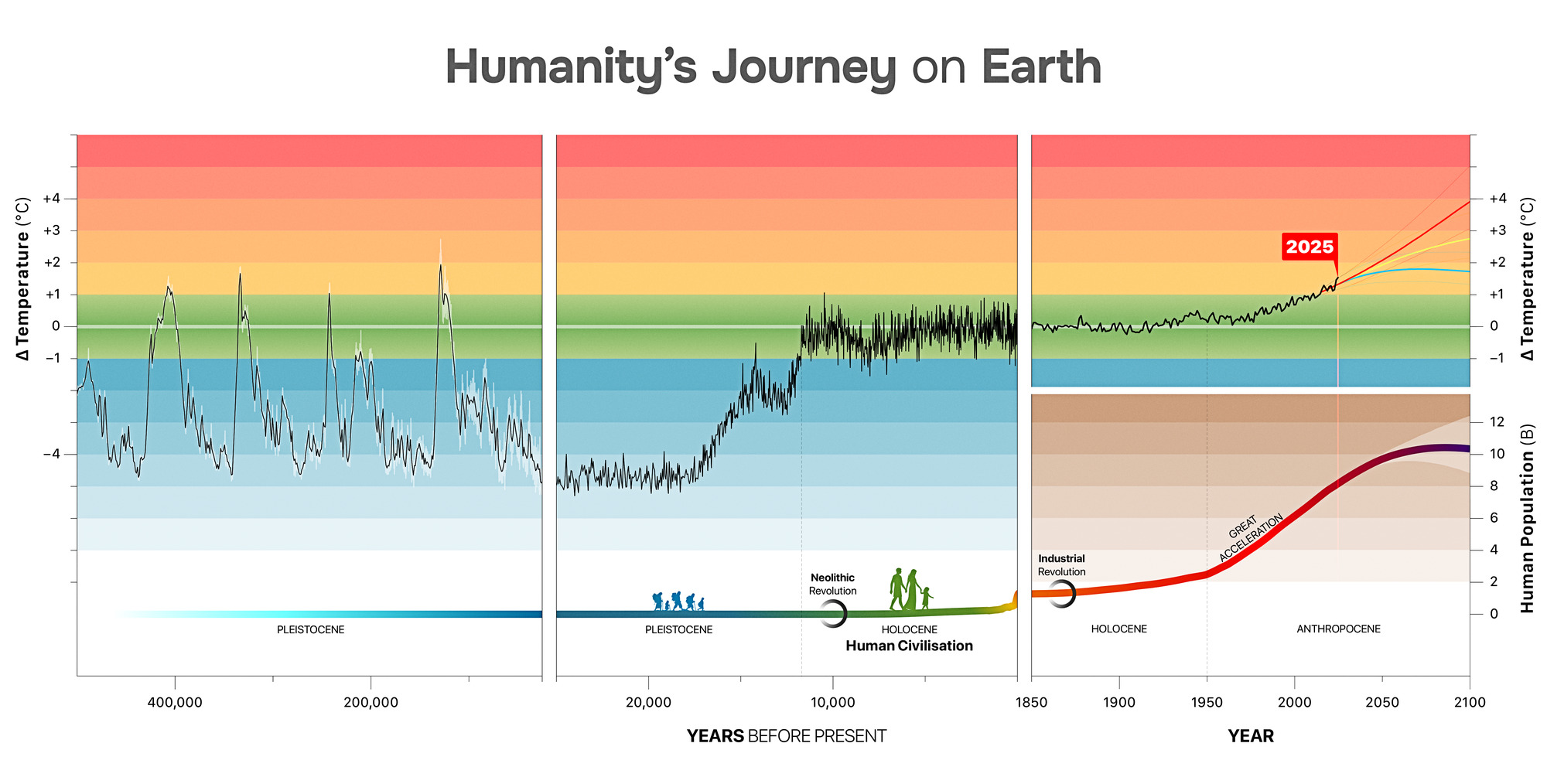
Humanity’s journey on Earth – Human population size and global temperature from 500,000 years before present (BP) until 2100. The figure is a composite of different data sets including paleo data estimates, recent measurements, and future projections. for a detailed description of the data underlying this figure, see here.
The challenge for humanity is to sustain the healthy functions that keep our planet in a relatively warm, stable, interglacial state, as characterized by the Holocene. Scientific evidence suggests that if we avoid crossing too many irreversible tipping points – which could lead to self-amplified warming and the deterioration of life-support systems on Earth – we will likely have another 50,000 years of a Holocene-like planet, before Earth naturally moves toward the next ice age. It is this stable interglacial state, the Holocene, during which agriculture and modern civilizations developed. Human activities of the last centuries are, however, shifting the Earth system away from such a stable state at an alarming rate.
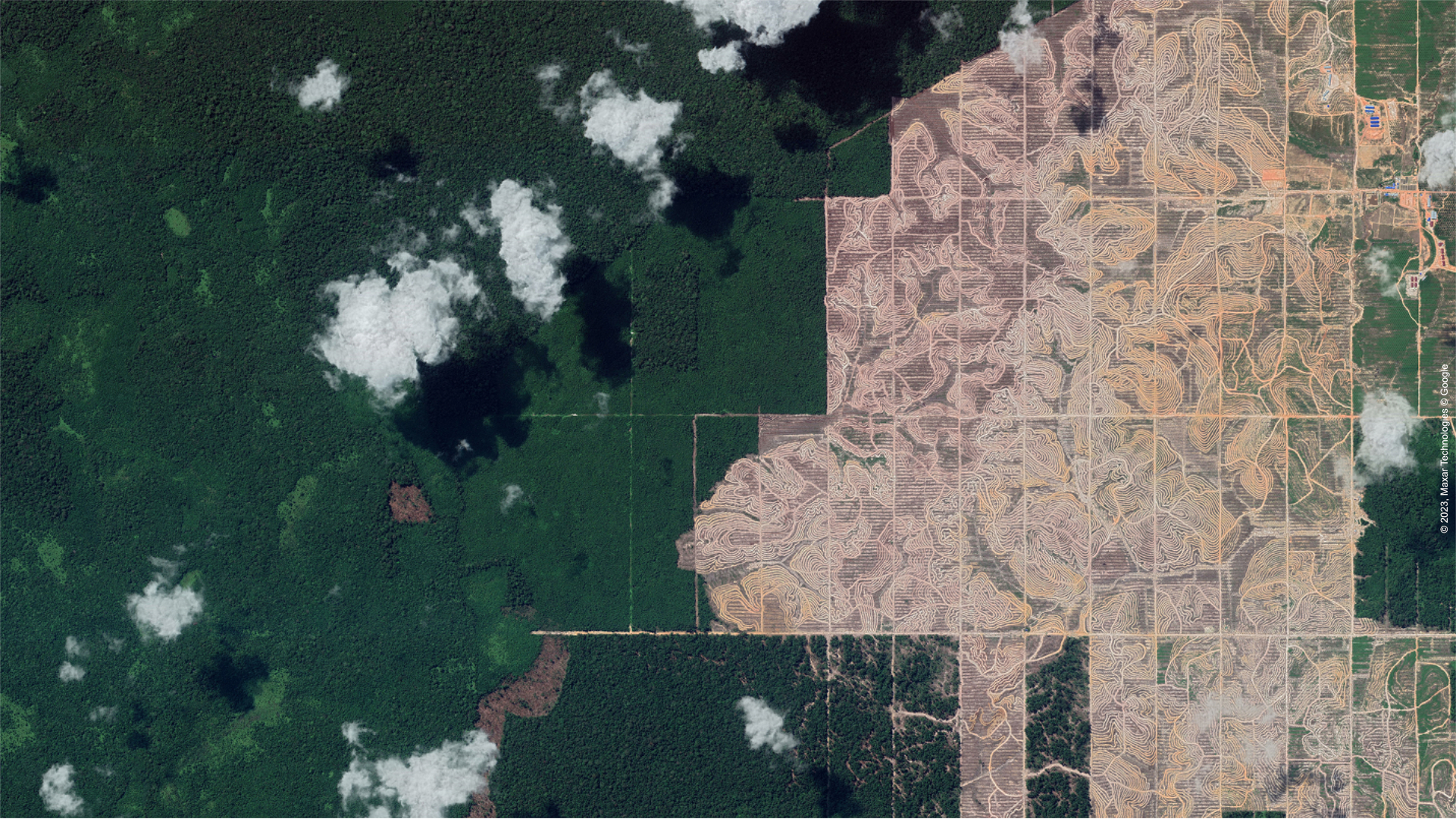
During the Holocene Epoch, large parts of the Earth experienced predictably moderate climates, which were suitable for agriculture and settlement. Freshwater was consistently available across many regions, although with pronounced regional patterns and intermittent shifts in large-scale circulation patterns. Biogeochemical cycles (such as carbon, nitrogen, and phosphorus) operated within balanced ranges, sustaining plant nutrients and ecosystem health. While biodiversity during the Holocene was subject to various fluctuations, the Holocene is considered an epoch of high biological resilience, with ecosystems capable of adapting to external pressures and providing crucial services such as pollination and pest control. Natural regulatory systems, such as ocean currents and atmospheric patterns, played vital roles in stabilizing the environment over long periods.
This period of relatively stable living conditions, combined with the agricultural revolution, enabled the global human population to grow from less than 10 million at the beginning of the Holocene to over a billion by the beginning of the 19th century, and to more than 8 billion today. In recent decades, human activities have intensified, potentially surpassing Earth’s capacity to sustain its stability. This shift marks the beginning of the Anthropocene, a period characterised by our dependence on fossil fuels, industrial agriculture, and the unsustainable use of resources which disrupts Earth’s delicate balance. This has led to rapidly increasing pressures on the planet, a phenomenon known as the “Great Acceleration”. Respecting Planetary Boundaries is of critical importance to safely navigate the Anthropocene and ensure sustainable development for future generations in a stable and resilient Earth system.