Change in Biosphere Integrity
Loss of species, ecosystems, and ecological functions sustain and regulate the overall state of the Earth.
Current State
Biosphere Integrity refers to the collective capacity of ecosystems across the planet to support life and maintain the overall health and stability of the Earth system. This depends on the composition and diversity of species, and their interactions as ecosystems. Human activities are putting increasing pressure on Biosphere Integrity through land-use change such as the expansion and intensification of agriculture and livestock production, as well as urban and industrial development, overexploitation of natural resources (like overfishing), the spread of invasive species, and various forms of pollution.
These pressures are further intensified by disruptions in other Planetary Boundaries, including Climate Change, Modification of Biogeochemical Flows (e.g. fertilizer pollution), and Novel Entities (e.g. chemical pollution by toxins and plastics). Today, the Planetary Boundary for Biosphere Integrity is strongly transgressed. When Biosphere Integrity is compromised, Earth system resilience is weakened, threatening the essential conditions that support human life on our planet.
Change in Biosphere Integrity
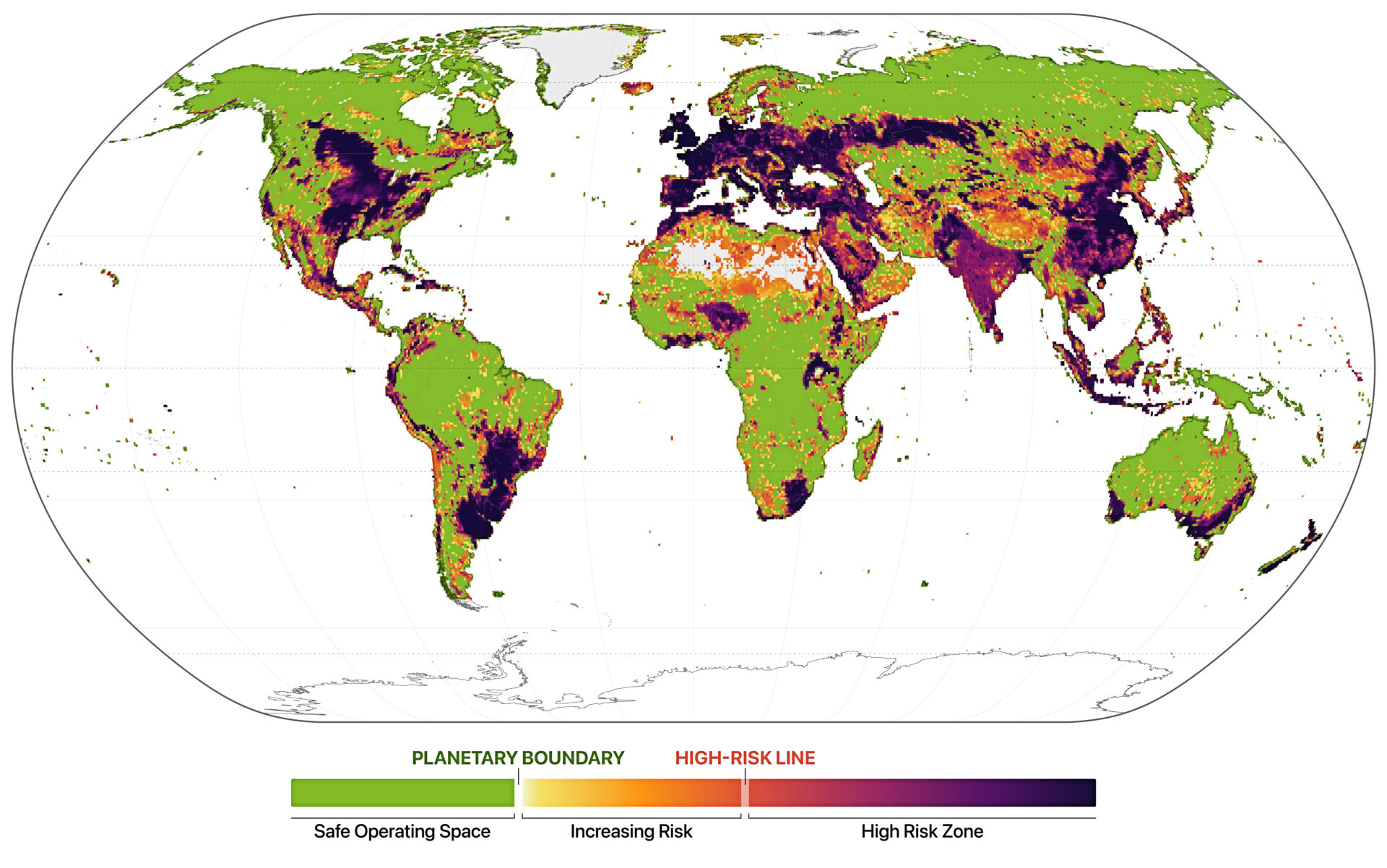
Global risk map of the Change in Biosphere Integrity, based on the functional integrity (HANPP) control variable. Transgression is based on the HANPP control variable. All values shown on the map refer to the year 2010. Based on data from Kastner et al. 2022.
Most boundary transgressions occur in large, continuous regions with high land-use intensity. In contrast, areas in regions without transgressions, such as the Amazon, the Congo Basin, and boreal forests, are primarily natural or semi-natural.
Impacts
The impacts of losing the integrity and functioning of the biosphere are hard to overstate. The biosphere co-regulates the overall state of the Earth on many levels, as it is closely tied into our planet’s biogeochemical cycles and energy balance. The loss of vital services provided by ecosystems also has the potential to deprive our societies of irreplaceable sources of food and feed, energy, materials and medicines, while destabilizing the entire Earth system. Examples are the loss of pollinators, which are needed for more than 75% of food crop species, and the loss of CO₂ uptake sequestration capacity, which could significantly accelerate climate change.
Destabilization of the Earth System
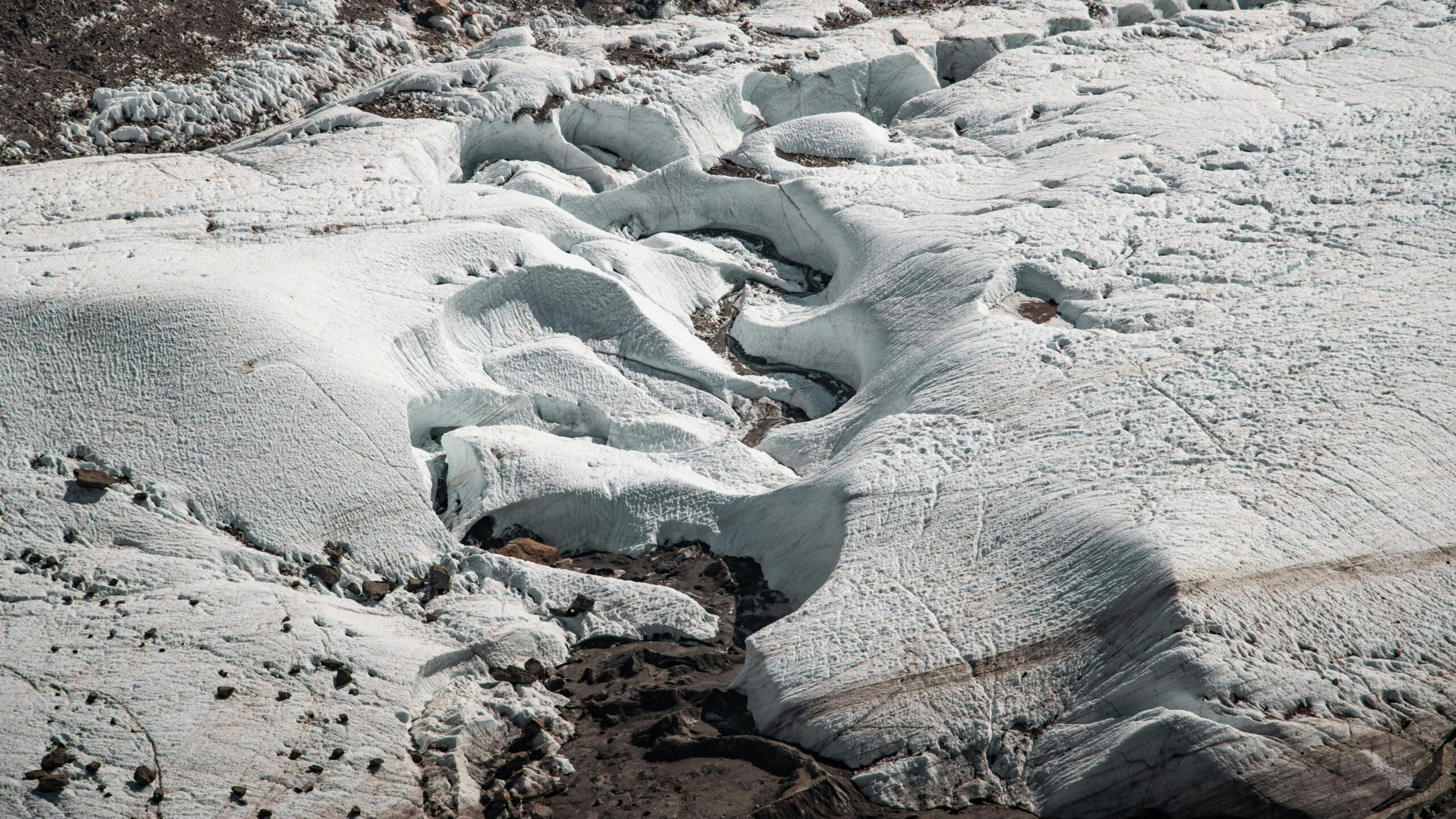
The biosphere co-regulates the overall state of the Earth on many levels, as it is closely tied into our planet’s biogeochemical cycles and energy balance. Loss of biosphere integrity disrupts these fundamental regulatory mechanisms, potentially destabilizing the entire Earth system and its ability to maintain conditions suitable for life.
Loss of Critical Ecosystem Services
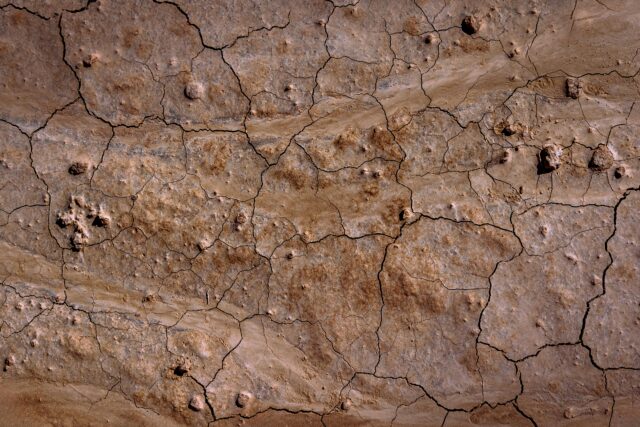
The loss of vital services provided by ecosystems has the potential to deprive our societies of irreplaceable sources of food and feed, energy, materials, and medicines. These ecosystem services form the foundation of human well-being and economic activity, making their loss a direct threat to societal stability and human survival.
Collapse of Essential Biological Functions
Critical biological functions are at risk of collapse, with cascading consequences. The loss of pollinators threatens more than 75% of food crop species, while diminished CO₂ uptake and sequestration capacity could significantly accelerate climate change, creating dangerous feedback loops that amplify environmental degradation.


Mary Robinson, Former President of Ireland and former UN High Commissioner for Human Rights, former Chair of The Elders (2018–2024) and current Elder, Planetary Guardian.
“These years have seen heatwaves, floods and hurricanes destroy communities across the globe, hitting hardest the most vulnerable who have not caused the problems. Humanity is putting the stability of the entire planet at risk. The urgency is clear. Now we must invest in the science, heed its warnings, and collectively act.”
Mary Robinson, Former President of Ireland and former UN High Commissioner for Human Rights, former Chair of The Elders (2018–2024) and current Elder, Planetary Guardian.
Key Drivers
Species Loss and Threat to Genetic Diversity
Species extinction rates are primarily driven by rapid expansions in agricultural and livestock farming lands, as well as direct exploitation of ecosystems through human activities such as fishing and logging. Climate change, pollution, and the introduction of invasive species further exacerbate these pressures. These stressors often interact in complex ways, introducing significant uncertainty into predictions of future biodiversity loss.
Overexploitation of Net Primary Production (HANPP)
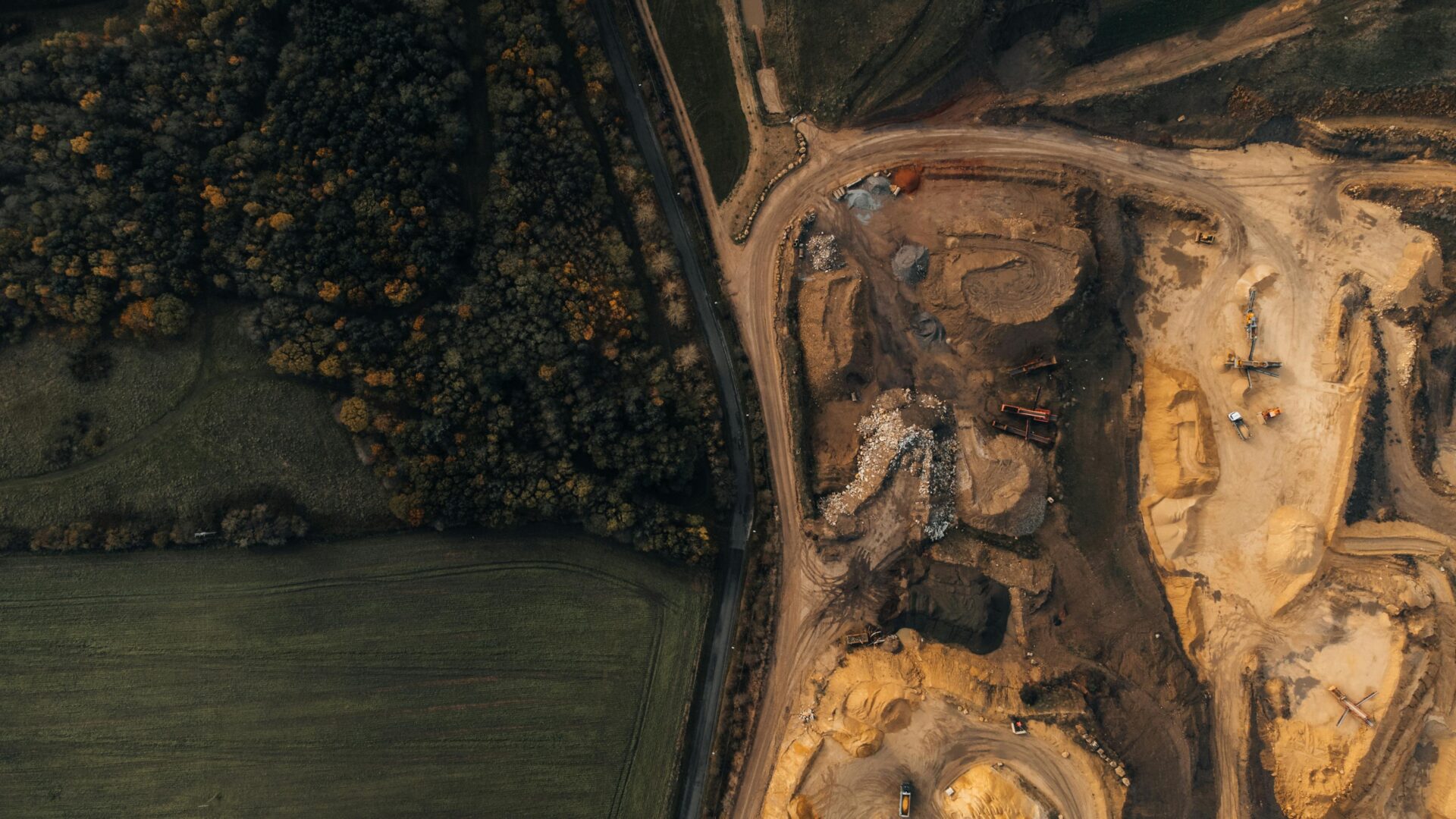
Human appropriation of net primary production (HANPP) for human consumption such as food, fuel, fodder, and fiber has historically exceeded sustainable levels for over a century. This extraction of energy from the biosphere varies across different biomes; on land, it involves harvesting plant materials and conversion of natural ecosystems into less productive managed lands. This diminishes the energy available to natural ecosystems, affecting their functioning as vital components of the Earth system. In marine ecosystems, energy extraction primarily occurs through fishing activities, which alter ecosystem dynamics.

Control Variables
The Planetary Boundary for Change in Biosphere Integrity is measured using two variables: The rate at which species are going extinct (genetic diversity), and the amount of energy humans are extracting from nature through harvesting, hunting and fishing (functional integrity).
Both the control variables for genetic diversity and the decline in the functional integrity of the biosphere have exceeded their safe levels. Globally, species are going extinct at an alarming rate of above 100 extinctions per million species years, and humans are using 30% of the available energy from nature.
Genetic Diversity: Species Extinction Rate
Cumulative number of extinctions of genera (closely related species with likely common ancestors) per century in different classes of vertebrates. This graph shows that at least 73 genera became extinct over the last 500 years. Similar estimates for mammals, birds and fish indicate a total extinction rate of up to 100 E/MSY. Data from Ceballos & Ehrlich (2023).
The significant and steadily increasing loss of global biodiversity raises concerns that Earth’s biosphere is losing resilience, adaptability and hence its ability to buffer against other PB transgressions.
Definition
The decline in genetic diversity, along with the loss of their habitats, threatens the biosphere’s ability to co-regulate the state of the planet by impacting the energy balance and chemical cycles on Earth. The Species Extinction Rate describes the speed at which the number of species (species richness) is reduced. High species extinction rates negatively impact ecosystem resilience because fewer species can lead to changes in ecological processes and species interactions that maintain ecosystem stability. Species extinction rates are used provisionally as a proxy for loss in genetic diversity and may be refined as more data becomes available.
Unit
Extinctions per Million Species-Years (E/MSY). For example, if 1 species out of 1 million species goes extinct every year, the extinction rate would be 1 E/MSY.
Historical Range
The background (i.e. normal) rate of extinction loss is estimated to be 1 E/MSY.
Planetary Boundary (PB)
The PB is set at 10 E/MSY because, according to latest expert advice, losing species at a rate 10x faster than the natural background rate is what the Earth system can tolerate. The boundary has a wide range of uncertainty (10100 E/MSY), with the safe threshold reflecting uncertainty and precaution to account for potential knowledge gaps and to minimize the risk of significant Earth system changes.
Functional Integrity: Human Appropriation of Net Primary Production (HANPP)
The energy we take from nature and use for our purposes. The plot displays the control variable “human appropriation of net primary production (HANPP)”, expressed as the percentage of the potential net primary productivity (NPP). The dashed line shows the Planetary Boundary of about 10% HANPP based on Richardson et al., 2023. The displayed datasets differ methodologically, yet consistently indicate that current HANPP levels lie within the High-Risk Zone (>20%). Stenzel et al. (2025) is based on a purely model-driven approach (LPJmL), while Krausmann et al. (2013), Kastner et al. (2022), and Matej et al. (2025) follow inventory-based approaches combined with LPJ-GUESS estimates of potential NPP. Richardson et al. (2023) combines HANPP shares from Krausmann et al. (2013) with a Holocene-like potential NPP derived from LPJmL and CLIMBER-X simulations. The lower HANPP values in Matej et al. (2025) compared to Kastner et al. (2013) mainly result from the exclusion of deforestation and reduced grazing demand in the underlying assumptions.
The current HANPP has exceeded safe levels since at least the early 20th century.
Definition
Net primary production (NPP) is the rate at which plants and other photosynthetic organisms produce biomass (organic carbon) in an ecosystem, after accounting for the carbon they use for their own respiration (gross primary production minus respiration). NPP is a fundamental measure of ecosystem productivity and health. It serves as a proxy for the energy flow into the biosphere that all life processes depend on. Human appropriated NPP (HANPP) measures the extent to which human activities, such as agriculture, forestry, and urbanization, appropriate NPP for human use by (1) inhibiting net primary production and (2) withdrawing energy by harvesting products for human use and consumption.
Unit
HANPP is measured in petagrams of carbon appropriated per year. In the context of Planetary Boundaries, HANPP is reported as a fraction of the natural Holocene reference NPP (i.e. energy flows into the biosphere without humans).
Historical Range
Without any human activity, HANPP would be zero. For low-impact early human societies, it would be close to zero.
Planetary Boundary (PB)
The PB is provisionally set at less than 10% of the Holocene reference NPP, and shifts into the zone of high risk at 20%. These thresholds are based on observational data and on ecological models that indicate negative trends in several critical metrics of biosphere functioning. As NPP is the basis for the energy and materials flow that underpins the biosphere’s functioning, today’s impact of HANPP reflects the significant declines seen across major indicators of ecosystem health.
Learn More

Tipping Points
Fragile regional systems with global consequences.